You've booked the photographer. You've nailed down the location. And now comes the part that somehow trips up almost every family: figuring out what everyone is actually going to wear.
It's one of those things that sounds simple until you're standing in front of your closet realizing your husband owns approximately one nice shirt, your toddler just outgrew the outfit you were counting on, and nobody can agree on anything. Family photo wardrobes stress people out more than almost any other part of the process, and yet most guides just tell you to "coordinate" without actually explaining what that means. So let's fix that.
1. Choose a Color Palette, Not Matching Outfits
Head-to-toe matching makes photos feel stiff and dated, and it's weirdly harder to pull off than it sounds because even small variations in white tones look mismatched on camera.
What actually works is picking three or four colors that belong together and letting each family member wear something within that range. Think of it less like a uniform and more like a mood board. Warm neutrals like cream, camel, rust, and terracotta always look gorgeous together. Cool classics like navy, sage green, dusty blue, and soft grey are a safe bet year-round. Rich earth tones like olive, burgundy, and warm taupe feel timeless, and soft pastels like blush, pale yellow, and lavender are perfect for lighter, airier sessions.
The trick is to pick your anchor color first, usually based on whoever is hardest to dress. If you've got a toddler or a reluctant teenager, start with what they're willing to wear and build everything else around it. It's so much easier than working backwards.
2. Coordinate, Don't Clone
Once you've got your palette sorted, nobody needs to be wearing the exact same style or even the exact same colors. Variety in texture, cut, and pattern is actually what makes group photos look interesting rather than flat, and this is where a lot of families leave visual interest on the table.
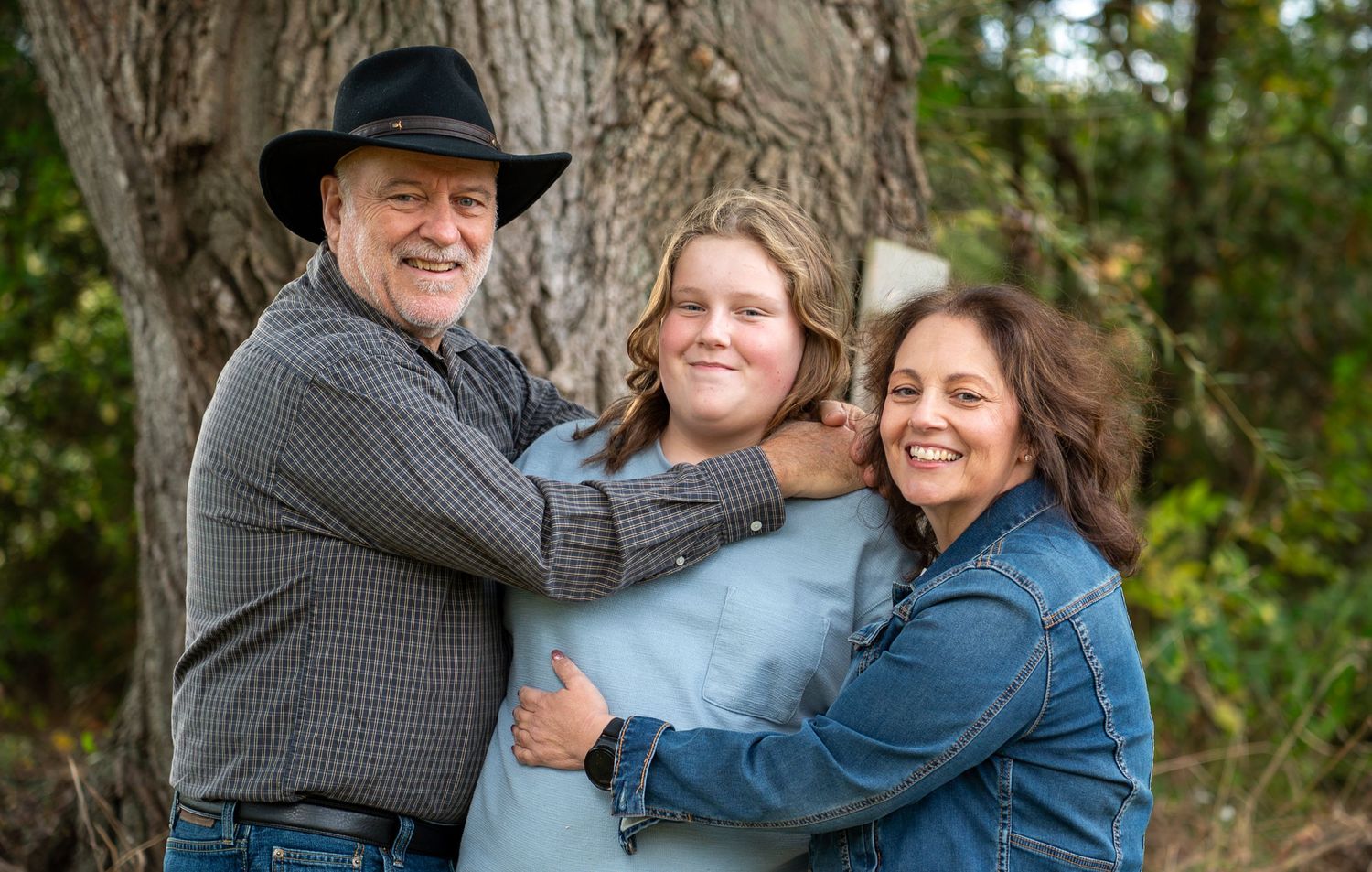
Let one or two people wear a subtle pattern like a plaid, a soft floral, or a thin stripe while everyone else sticks to solids. Mix textures where you can. A linen shirt, a chunky knit sweater, and a denim jacket can all work beautifully together if they share a color family. You can also let adults wear slightly more muted, deeper tones while dressing the kids in a brighter or lighter version of the same hue. It naturally draws the eye toward the little ones, which is usually right where you want it anyway.
Just watch out for clashes in formality. If one person looks like they're headed to a cocktail party and another looks like a Sunday at the farmers market, the photo reads as disjointed no matter how well the colors match.
3. Dress One Level Up From Everyday
This is where a lot of families go wrong in one of two directions. Either they go too casual thinking it'll feel more relaxed and natural, or they go all-out formal and end up with stiff, uncomfortable photos where nobody looks like themselves. The sweet spot is honestly just one notch above what you'd normally wear on a nice day out.
That means a chambray button-down instead of a t-shirt, dark jeans instead of your everyday pair, a midi dress instead of a casual sundress, a knit sweater and tailored trousers instead of a sweatshirt and joggers. Elevated, but not costumed. The goal is to look polished enough that you'll want to frame it and comfortable enough that your kids aren't yanking at their collars ten minutes in.
4. Know What to Avoid
There are a handful of wardrobe choices that almost always cause problems on camera, and knowing them ahead of time saves you a lot of grief when the proofs come back.
Large logos and bold graphics are the big ones. Brand names, sports team logos, or busy graphic tees pull attention straight to the shirt and away from faces, which is the opposite of what you want. Neon and fluorescent colours are another issue. They cast strange light onto skin tones and compete with everything else in the frame, so save the highlighter yellow for another day. All-white and all-black can work as accents, but dressing the whole family in either can sometimes backfire. White blows out in bright sunlight and black loses all its detail in shade.
It's also worth thinking about longevity. Very trendy pieces, an extremely specific silhouette or a style that's everywhere right now, tend to make photos feel dated faster than you'd expect. Classic cuts just hold up better. And keep an eye on patterns: one or two in a group adds life, but three or four competing patterns in the same frame is genuinely hard to look at.
5. Think About Where You're Shooting
Your outfits don't exist in a vacuum. They're going to be set against a real background, and what sings in one environment can completely fall flat in another.
For a fall session in the woods, warm tones like rust, mustard, cream, and burgundy feel right at home. For a beach or lakeside shoot, blues, whites, sandy neutrals, and soft coral naturally complement the setting. Urban sessions with brick walls or city backdrops tend to suit muted tones, navy, charcoal, and dusty rose. A studio with a white or grey backdrop calls for deeper, richer colors that won't wash out. And if you're in a wildflower field or open meadow, soft earth tones and pastels blend into the landscape beautifully.
When in doubt, just ask your photographer. Most have strong opinions about what works at their favorite spots and they'll tell you exactly what to steer clear of. It's genuinely one of the most useful conversations you can have before the session.
6. Layer When You Can
Layers are one of the easiest ways to add visual depth to a group photo, and they give you practical flexibility on the day too. A jacket that comes off if it gets warm, a scarf that adds a pop of color without committing to a whole new outfit — these little things give you options and make the group look more dynamic.
Think denim jackets over floral dresses, an open flannel over a plain tee, a cardigan or wrap for mom, a vest for dad or older kids. Layers also do a ton of heavy lifting when you've got a mixed-age group. A baby in a romper, a toddler in overalls, and a teenager in jeans and a jacket can all look cohesive as long as the colors are pulling in the same direction. The textures and layers create visual interest; the palette is what holds it all together.
7. Dress the Kids Strategically (and Last)
Kids should honestly be driving the wardrobe planning more than anyone else, for a few reasons. Their options are more limited, their outfits are harder to predict, and they're usually the focal point of the photos anyway. Start with them and work outward.
Whatever they're wearing, make sure it's been worn at least once before. Nothing reveals an itchy tag or an awkward waistband like an excited, squirmy kid who's already over the whole experience. Stiff or uncomfortable pieces are a hard no. A miserable kid in a scratchy outfit will show in every single frame, no matter how perfect the light is. And do yourself a favor: don't put them in their photo clothes until the absolute last possible moment before you leave. Always bring a backup outfit. Something will spill. It genuinely always does.
8. Don't Forget the Details
The outfit is only part of the picture, literally. Hair, accessories, and shoes all show up on camera, and small things that feel like afterthoughts at home become really obvious once you're looking at 4x6 prints on your wall.
For hair, style it the way you would for any nice occasion, but avoid making big changes right before the shoot. A drastic new cut or a fresh color that hasn't settled yet is a gamble you don't need to take. For kids, simple almost always photographs better than elaborate. For accessories, keep jewelry on the quieter side. Something meaningful is lovely, but a statement piece that dominates the frame pulls attention away from your face, which is where it belongs. And shoes really do show up, especially in wider shots, so make sure they're clean, in good condition, and feel intentional as part of the overall look.
9. Do a Mirror Check Before You Leave
Before anyone gets in the car, take five minutes to line everyone up and look at the group as a whole. It sounds obvious, but this step catches things that are really easy to miss when you're focused on one person at a time.
Check that the colors feel cohesive together, not just individually. Look for any large logos or distracting graphics you might have missed. Make sure everyone looks and feels comfortable. Scan for wrinkles, stains, missing buttons. And always look at the shoes. They're the thing most often forgotten until it's too late to change. Five minutes before you leave is infinitely easier than noticing something in the proofs weeks later and wishing you'd caught it.
10. Wear What Actually Feels Like You
All of the above is genuinely useful, but it's meant to be a set of tools, not a rulebook. The best family photos come from families who are relaxed and present, and you can't be either of those things if you're wearing something that doesn't feel like you.
If your family lives in earthy tones and relaxed, flowy layers, lean all the way into that. If you're naturally more polished and put-together, own it. The palette tips and pattern rules are there to help, not to turn everyone into a version of themselves they don't recognize. The best family photos come from people who feel comfortable and confident in what they're wearing, and that's a lot easier when the clothes actually feel like you.